
Small business accounting: 5 common mistakes small businesses make
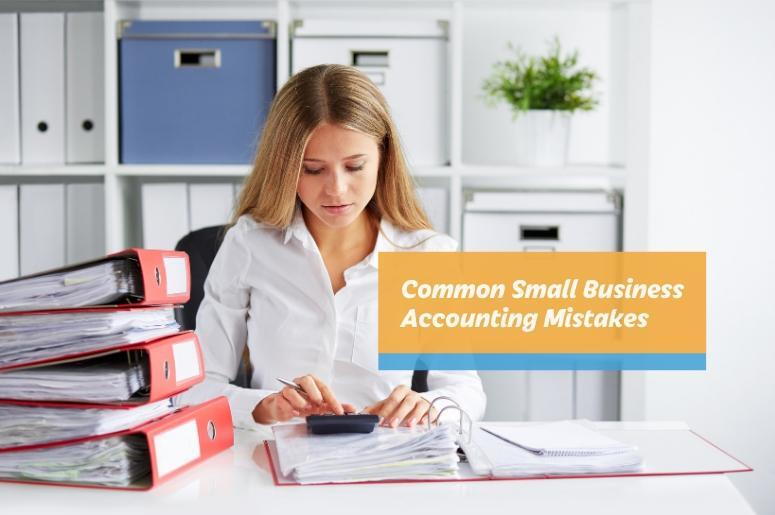
When starting out, many small businesses choose to take care of their own books. However, this can be the first of many mistakes, particularly if you have no experience in accounting. Here are some of the most common mistakes that you could fall victim to:
Mistake #1: Mathematical miscalculations
Armed with a calculator, you might think that nothing can go wrong when working out your earnings and outgoings. But it's all too easy to slip up and make mistakes, which can be difficult to spot if you're not used to working with numbers. Errors like this could cost your company in the long term, as you might not have the money to run certain operations, or tax time could hit you in a particularly bad way. It's always best to check figures several times or, even better, ask a professional to handle them for you.
Mistake #2: No backups
Too many small businesses forget to back up their financial records. Whether you're using professional software or not, it's important to have at least two copies of your books. This could be a paper and digital copy or linking your accounts to secure cloud storage. If you don't have any backups, you could quickly find yourself in hot water when your computer's hard drive fails and you have no information to give the taxman.
Mistake #3: Not setting a budget
It's essential to stick to a budget, not just so you know how much you can spend, but also to give you an idea of how your business is growing. Budgeting and forecasting can help you to plan your finances better and highlight areas where you need to cut costs or have room to spend a little extra.
Mistake #4: No separate business and personal accounts
When you use the same account for your personal finances as well as your business, things quickly become confusing. By keeping your finances separate, you'll always know what transactions were commercial and available to claim tax on, and which transactions were your own and unrelated to your business' budget.
Mistake #5: Trying to DIY on your bookkeeping
All of these common mistakes can be avoided by opting to choose a professional bookkeeping service. At Ascent Accountants we’ve been helping small businesses in Perth for many years now to stay organised and on top of their business’ tax, books and overall financials.
With our experience and technical knowledge we can help you better manage your business and free up your time so you can do what you do best and focus more on what you love doing.
And we’re guessing that’s not doing your own bookkeeping!
Need help with your accounting?

When you're looking for ways to save money, it's easy to focus on the big expenses. But sometimes the easiest savings are sitting in the things you pay for every month without really thinking about them. Subscriptions, unused services and small recurring expenses can quietly add up over time. Here are five simple things worth checking. 1. Audit Your Subscriptions Start by looking at all the subscriptions you're currently paying for. Go through your Apple App Store or Google Play Store accounts and check what you're being charged for each month. You may find subscriptions you've forgotten about, apps you no longer use or services that are automatically renewing. Even a few dollars here and there can add up to a significant annual expense. 2. Cancel Services You Don't Use If you've paid for a service that you haven't used in the past month, ask yourself whether you really need it. Unused streaming services, apps, memberships and other recurring payments can continue taking money from your account long after you've stopped using them. Cancelling an unnecessary subscription is one of the easiest ways to stop the leakage. 3. Negotiate Better Deals If you've been with the same provider for a long time, don't assume you're already getting the best deal. It may be worth contacting your provider and asking whether there is a better plan or rate available. This could apply to a range of services where you're a long-term customer. A few minutes spent asking the question could result in ongoing savings. 4. Set Reminders for Renewals Free trials and annual subscriptions can be easy to forget about. Set a reminder for when a free trial ends or when a subscription is due to renew. That gives you the opportunity to decide whether you still want the service before you're charged again. Your calendar or phone can prompt you. 5. Track Your Spending Small expenses are easy to overlook when they're spread across multiple accounts and services. Using a budgeting app or regularly reviewing your transactions can help identify areas where you're spending more than you realise. You may discover recurring payments or habits that no longer represent good value. Small Changes Can Add Up Saving money doesn't always require a major lifestyle change. Sometimes it's simply about paying attention to where your money is going and cutting expenses you no longer need. The article provided makes the same point: regularly reviewing subscriptions and cutting back on unnecessary expenses can help build a stronger financial foundation. saving costs things to look at At Ascent Accountants, we can help you look at the bigger picture of your finances and identify opportunities to make your money work harder for you.

Finding a caveat on a property you're looking to buy can be an unwelcome surprise. A caveat can prevent certain dealings with a property from being registered, which can delay a sale or prevent a purchaser from settling until the issue has been dealt with. It can also create problems with finance because lenders generally require clear title. First, What Is a Caveat? A caveat is a legal notice recorded against a property. Importantly, a caveat may only be lodged by a person or entity with a legal or equitable proprietary interest in the land. It effectively acts as a statutory injunction, preventing the Registrar of Titles from registering certain dealings with the property, such as transfers, mortgages or leases, unless the caveat is withdrawn, removed by court order or otherwise lapses. caveat on properties Why Might a Caveat Be Lodged? There are several reasons why a caveat may be placed on a property. These can include securing a debt owed by the borrower, protecting a buyer's equitable interest in land under a contract of sale, or protecting an unregistered or equitable mortgage. A caveat can therefore indicate that another party has an interest in the property that needs to be resolved. How Can a Caveat Affect a Property Purchase? If you're buying a property with a caveat on the title, it can complicate the transaction. For example, the sale may be delayed or prevented from proceeding until the caveat has been dealt with. It can also affect finance. Lenders generally require clear title, so an unresolved caveat may make it difficult to obtain or finalise finance. What Should You Look Out For? If a caveat appears on a property, you're considering buying, don't simply assume it will disappear before settlement. Find out: Why the caveat has been lodged. Who has lodged it. What interest the caveator is claiming. Whether the caveat needs to be withdrawn or formally removed. Whether it could affect your ability to settle or obtain finance. The type of caveat matters too. The source material identifies different types, including absolute caveats, subject-to-claim caveats, caveats lodged after notice, improper dealing with caveats and registered proprietor's caveats. caveat on properties How Is a Caveat Removed? There are several possible ways of dealing with a caveat, depending on the circumstances. These can include withdrawal by the caveator, statutory removal or court resolution. A withdrawal generally needs to be signed by the caveator and lodged electronically where required. There is also a process for applying for removal under section 138B of the Transfer of Land Act 1893. caveat on properties The caveator has 21 days after being served with the relevant notice to act, although the Supreme Court may order an extension in some circumstances. Don't Let a Caveat Catch You by Surprise If you're buying or selling property, understanding what is recorded on the title is an important part of the process. An unexpected caveat doesn't necessarily mean a property deal can't proceed, but it does mean there is an issue that needs to be understood and dealt with. At Ascent Property Co, we can help you understand the financial implications of a property transaction and work alongside your legal advisers to help you make informed decisions.

Are you using the logbook method to claim car expenses? The ATO has been increasing its audit focus on car expense claims, with particular attention being paid to both whether logbooks meet the requirements, and if the business-use percentage has been calculated correctly. Here are eight common areas that could cause potential issues with your claim. 1. Keeping a logbook in the wrong income year A valid logbook must be kept in the first income year in which you use the logbook method to claim car expenses. After that, a new logbook is generally required every five years. If you're not sure whether your current logbook is still valid, it's worth checking before relying on it for your tax return. 2. Not keeping the logbook for the full 12 weeks A valid logbook needs to cover a continuous period of at least 12 weeks. The 12-week period can cross from one income year into another, provided it includes part of the relevant income year. 3. Choosing your busiest 12 weeks It can be tempting to choose a 12-week period when you were doing more business driving than usual. But the business-use percentage from a 12-week logbook isn't automatically the percentage you can apply for the entire year. Your calculation needs to consider variations in how the car was used throughout the year. 4. Forgetting about a replacement car If you replace your car during the income year, you can't simply transfer your existing logbook to the new vehicle due to changes in usage. If you want to rely on the existing logbook for the replacement car, there are nomination requirements that need to be met. Otherwise, a new logbook may be required. 5. Writing vague descriptions of business trips The details matter. A logbook needs to record the relevant details of each business journey, including the dates, odometer readings, kilometres travelled and the purpose of the journey. Entries such as "business trip", "client visit" or "customer visit" may not be enough . The description should explain why the journey was made. 6. Reconstructing your logbook later Your logbook should be kept as you make the journeys, or as soon as possible afterwards. Inconsistent entries, duplicated dates, identical odometer readings or records that don't line up with other information can raise questions about whether the logbook was reconstructed from memory. 7. Getting business and private kilometres wrong Your business-use percentage needs to be based on a reasonable estimate of your business kilometres for the year. That means considering changes in your work, holidays, leave, changes in employment duties, changes in your work location and other variations in how the vehicle was used. 8. Forgetting your odometer records and receipts A logbook is only part of the record-keeping requirements. You also need odometer records for the relevant period, and car expenses such as registration, insurance and servicing generally need to be supported by appropriate records. What Should You Do? If you use the logbook method, don't assume that having a 12-week logbook automatically makes your claim correct and compliant. The ATO's increased scrutiny means it's important to make sure your logbook is valid, your entries are accurate and your business-use percentage reflects how the vehicle was used throughout the year. At Ascent Accountants, we can help you review your car expense records and make sure your logbook and business-use calculation meet the requirements before you claim.

In your 50s and thinking about retirement? Discover 10 practical strategies to boost your super and get your retirement savings on track.

Buying your first home? From deposit schemes to stamp duty concessions, here are 5 government schemes that could help you get into the market sooner.

A new way to claim work-related expenses is coming for the 2027 tax return — but there is an important catch. From 1 July 2026, eligible taxpayers can claim a standard deduction of up to $1,000 for certain work-related expenses, without having to substantiate each expense individually. Sounds simple enough. But before you assume you can claim $1,000 on top of everything else, there are a few things you need to know. The $1,000 Is the Maximum The new standard deduction is capped at $1,000. It is designed to cover certain common work-related expenses, such as work-related phone and internet, home office expenses, stationery and some travel expenses. You can't claim the $1,000 and then claim those same expenses again separately. If you have actual work-related expenses of more than $1,000, you can continue to claim your actual expenses under the existing rules, provided you meet the requirements and have the records to support them. Do I Still Need to Keep My Receipts? Yes: and this is where it is worth being organised. If you use the standard deduction, you don't need to substantiate the individual expenses covered by it. But if you think your actual work-related expenses could be more than $1,000, keeping your receipts and records throughout the year will allow you to claim your actual expenses instead. There are also some deductions that aren't covered by the standard deduction and can still be claimed separately if you are eligible. It's for Your 2027 Tax Return The new deduction applies from the 2026–27 financial year, so you won't use it for the tax return you are preparing now. It will first apply to your 2027 tax return, lodged from July 2027. Is the $1,000 a $1,000 Tax Refund? No. The $1,000 is a deduction from your taxable income. It doesn't mean you'll receive an extra $1,000 back from the ATO. The value of the deduction will depend on your individual tax circumstances. What Should You Do Now? The best thing you can do is keep track of your work-related expenses throughout the 2026–27 financial year. When it comes time to prepare your 2027 tax return, we can look at your circumstances and determine whether the standard deduction or claiming your actual expenses is likely to give you the better outcome. At Ascent Accountants, we can help you make sense of the new rules and make sure you're claiming the deductions you're entitled to: without claiming the same expense twice!